Explore straightforward information, helpful guidance and practical perspectives across home, garden, interiors, renovation and property.
Read the article below, then explore more useful content from across the Deakin Lock Home & Garden site.
The right tools can make a considerable difference to the quality, speed and safety of almost any practical job. Whether working in construction, automotive maintenance, engineering, plumbing, electrical installation or carrying out repairs around the home, dependable equipment allows tasks to be completed accurately and efficiently. Investing in well-designed tools can also reduce frustration, improve comfort and provide better long-term value than repeatedly replacing cheaper alternatives.
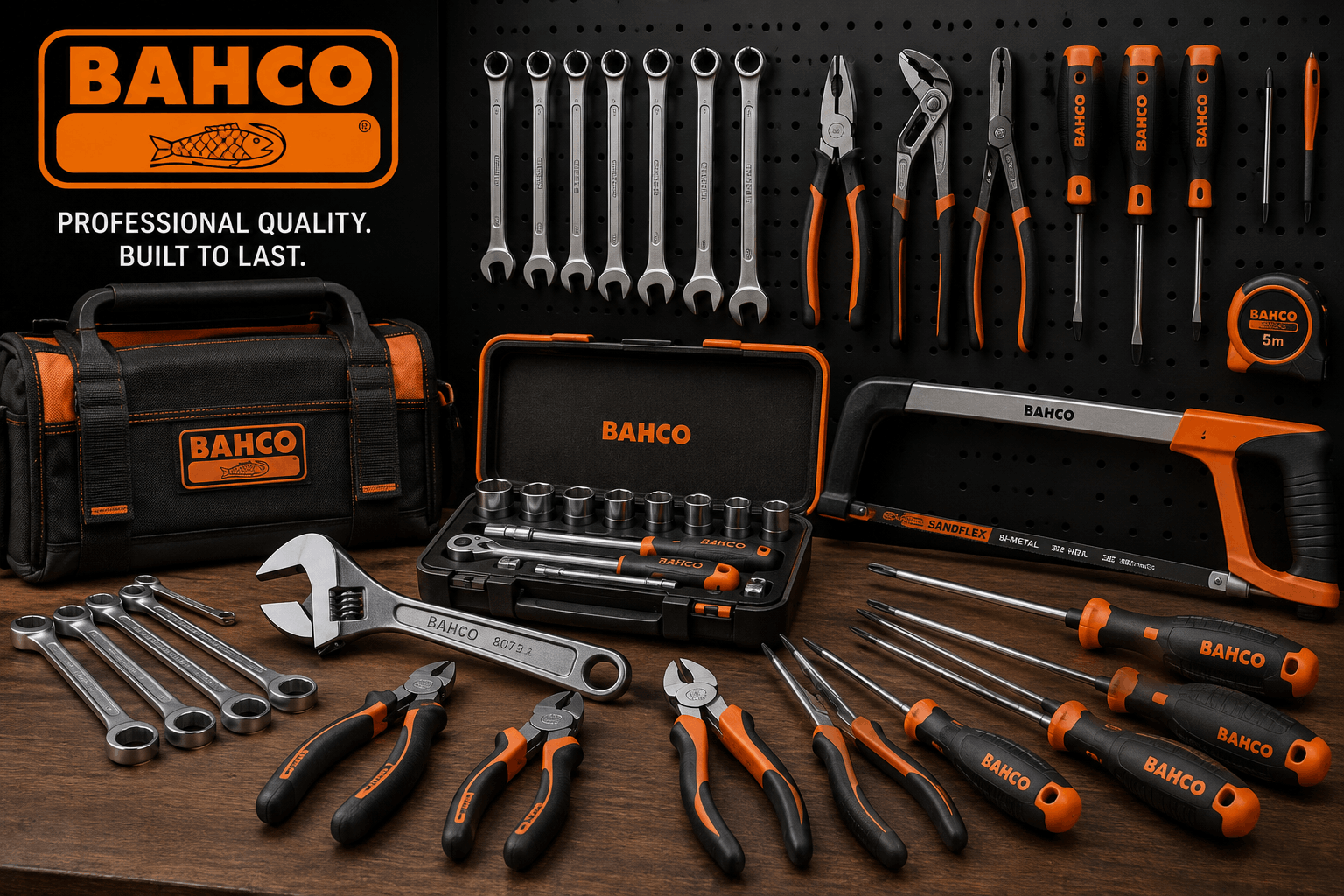
For professionals and DIY users researching Bahco Tools, the range covers an extensive selection of hand tools, cutting equipment, workshop products and specialist solutions designed for demanding applications. The Bahco name has a long history within the tool industry and is particularly associated with products such as adjustable wrenches, saws, socket sets, pliers and professional tool storage.
The origins of Bahco can be traced back to Sweden in the nineteenth century. The brand's development is closely associated with innovations in hand-tool design, including early developments in adjustable wrenches and modern saw blades. Today, its products are used across numerous trades and industries worldwide.
One of the best-known products associated with the brand is the adjustable wrench. An adjustable wrench provides flexibility because the jaw width can be altered to accommodate different sizes of nuts, bolts and fittings. This makes it particularly useful for engineers, plumbers, mechanics and maintenance professionals who regularly work with multiple fastener sizes.
Spanners and wrench sets remain fundamental components of most professional toolkits. Combination spanners provide both an open end and a ring end, allowing the user to select the most suitable approach for a particular fastener. Ratcheting versions can make repetitive work considerably quicker, especially where access is restricted.
Socket sets are another essential workshop and automotive tool. A comprehensive socket set may contain sockets in multiple sizes alongside ratchets, extension bars, universal joints and other accessories. Selecting the correct socket for a fastener helps minimise the risk of damaging nuts and bolts while allowing greater torque to be applied safely.
Screwdrivers are equally important. Different applications require flat, Phillips, Pozidriv, Torx and other drive profiles, making a comprehensive screwdriver selection valuable for both professionals and home users. Good handle ergonomics can improve grip and control, particularly during repetitive tasks.
Pliers are available in numerous configurations for gripping, cutting, bending and manipulating different materials. Combination pliers are useful general-purpose tools, while long-nose pliers provide improved access in confined areas. Side cutters, water-pump pliers and specialist electrical tools serve more specific applications.
Cutting tools form another important category. Hacksaws, hand saws and specialist blades are widely used across construction, engineering and maintenance. Selecting the correct blade is particularly important because tooth configuration and blade material should be matched to the material being cut.
Woodworkers and construction professionals may require different saw designs depending on whether they are cutting timber, sheet materials or other building products. A sharp, appropriate blade generally produces cleaner cuts while requiring less physical effort from the user.
Files are sometimes overlooked but remain valuable workshop tools. They allow metal, plastic and other materials to be shaped, deburred and finished accurately. Different profiles, including flat, round and half-round files, make it possible to work on a wide variety of shapes and surfaces.
Tool storage is another consideration for anyone building a substantial collection. Toolboxes, cases, bags and workshop cabinets help keep equipment organised while protecting individual tools from damage. For mobile tradespeople, effective organisation can also reduce the amount of time spent searching for the correct tool on site.
Professional users should consider ergonomics as well as durability. A tool may be used hundreds of times during a working week, so handle shape, grip material, weight and balance can significantly influence comfort. Ergonomically designed tools can help reduce hand fatigue during repetitive work.
Safety should always influence tool selection. Using an incorrectly sized spanner, damaged screwdriver or unsuitable cutting tool increases the likelihood of slipping and potentially causing injury. Tools should therefore be inspected regularly and replaced when excessive wear or damage compromises safe operation.
For electrical work, appropriate insulated tools may be required. Tools intended for specific electrical applications should meet the relevant standards for their intended use. A standard screwdriver with a plastic-looking handle should never automatically be assumed to provide electrical protection.
Measurement and accuracy are equally important in many trades. Tape measures, squares, levels and other measuring equipment help ensure materials are positioned and cut correctly. Accurate measurement reduces waste while improving the quality of the finished job.
When selecting tools, it can be useful to think about frequency of use. Someone who occasionally carries out household repairs may only require a compact general-purpose toolkit. A professional mechanic or engineer, by comparison, may benefit from specialist individual tools and comprehensive sets designed for repeated daily use.
Buying individual tools can sometimes be preferable to purchasing a large kit. This allows users to build a collection around the tasks they actually perform rather than accumulating equipment they rarely use. Sets, however, can offer a convenient way to obtain multiple related sizes while keeping everything organised in one case.
Maintenance can significantly extend tool life. Cutting surfaces should be kept clean, moving components may require occasional lubrication, and tools should be stored somewhere dry to reduce corrosion. After working in dirty or damp environments, cleaning equipment before storage can prevent premature deterioration.
Quality is particularly important when tools are relied upon professionally. A failed tool can cause delays, damage components or create safety risks. For tradespeople whose equipment is used every day, durability and reliability can therefore be more important than the initial purchase price.
It is also worth considering replacement parts and consumables when choosing specialist equipment. Saw blades, cutting components and other wear items eventually require replacement, so readily available compatible consumables can make a tool considerably more practical over its working life.
Ultimately, Bahco Tools cover a broad range of equipment suitable for professional trades, workshops and practical tasks around the home. From adjustable wrenches and socket sets to saws, pliers, screwdrivers and tool storage, choosing the correct tool for each application can improve accuracy, efficiency and safety while providing dependable equipment capable of supporting years of regular use.
Discover more practical ideas, useful guides and fresh perspectives across home, garden and property.