A Practical Guide to Energy-Efficient and Sustainable Home Heating
Heating is one of the largest contributors to household energy consumption in the UK, making efficiency an important consideration for homeowners, landlords and businesses. As energy prices fluctuate and environmental awareness increases, more people are exploring heating solutions that offer reliable warmth while reducing unnecessary energy use. Modern heating technologies provide a range of options, from electric radiators and infrared panels to heat pumps and intelligent heating controls.
For consumers researching Eco Heaters, understanding how different heating technologies work is essential before making a purchasing decision. The term is commonly used to describe heating products designed to improve energy efficiency, offer greater temperature control or reduce environmental impact. However, not every heater marketed as environmentally friendly will necessarily deliver lower running costs or carbon emissions. The most appropriate solution depends on the property, insulation standards, energy tariffs and how individual rooms are used.
Traditional heating systems have often relied on centralised boilers distributing heat throughout a property. While these systems remain widely used, improvements in electrical heating technology and smart home controls have created additional options for managing indoor temperatures.
Electric heating can be particularly attractive for properties without access to mains gas, individual rooms requiring occasional warmth or buildings where installing conventional central heating would be impractical.
However, the efficiency of a heating appliance should not be confused with the overall cost of operating it. A heater may convert nearly all the electricity it consumes into heat while still being expensive to run compared with alternative heating technologies.
Understanding this distinction is fundamental when comparing modern heating products.
What Are Eco Heaters?
Eco heaters are generally heating appliances or systems promoted for their ability to provide warmth while limiting energy waste or environmental impact.
The term does not represent a single recognised heating technology or independently verified efficiency classification.
Instead, it may be applied to several different products, including electric panel heaters, oil-filled radiators, infrared heating panels, ceramic heaters and heat pumps.
Some products focus on precise temperature control, while others use different methods of distributing warmth throughout a room.
Smart thermostats, programmable schedules and occupancy sensors may also contribute to more efficient operation.
For example, a heater with a reliable thermostat can reduce electricity consumption by switching off or lowering its output once the desired temperature has been reached.
However, the presence of an eco mode does not automatically mean that a heater produces more warmth from each unit of electricity.
Most conventional electric resistance heaters convert virtually all the electricity they consume into heat within the room.
The main differences between these appliances concern heat distribution, responsiveness, control features and suitability for particular spaces.
Heat pumps operate differently because they transfer heat from the surrounding environment rather than generating all their heat through electrical resistance.
This distinction can produce substantial differences in energy consumption.
For consumers considering Eco Heaters, identifying the underlying heating technology is therefore more important than relying on the product's environmental branding.
Understanding Energy Efficiency in Electric Heating
Electric heating efficiency is frequently misunderstood.
A conventional electric resistance heater converts almost all the electrical energy it consumes into heat.
This applies to many panel heaters, fan heaters, ceramic heaters and oil-filled radiators.
For example, a 1,000-watt electric heater operating continuously at full power for one hour consumes approximately one kilowatt-hour of electricity.
A 2,000-watt heater operating continuously at full power for the same period consumes approximately two kilowatt-hours.
The actual consumption over a longer period depends on thermostat operation, room temperature, heat loss and user behaviour.
A higher-powered heater may warm a room more quickly, but it also consumes electricity at a higher rate while operating at full output.
Claims that one conventional resistance heater uses dramatically less electricity than another to deliver the same quantity of heat should therefore be treated cautiously.
The most meaningful efficiency improvements often come from reducing unnecessary heating.
Programmable thermostats can prevent rooms from being heated when they are unoccupied.
Zoned heating allows different rooms to operate at different temperatures.
Better insulation reduces the amount of heat required to maintain comfort.
These measures can influence overall consumption more significantly than the visual design or branding of a particular heater.
Infrared Heating Panels
Infrared heating has become increasingly popular among consumers interested in alternative electric heating systems.
Unlike conventional heaters that primarily warm surrounding air, infrared panels emit radiant energy that can be absorbed by people and surfaces within their effective range.
This approach is sometimes compared with the sensation of warmth from sunlight, although the technologies and radiation characteristics differ.
Infrared heating can provide useful comfort in certain environments, particularly where direct radiant warmth is desirable.
Wall-mounted and ceiling-mounted panels can also save floor space.
Some models are designed to resemble mirrors, decorative panels or conventional wall features.
This makes them attractive for contemporary interiors where discreet heating is preferred.
However, infrared panels are still electric resistance heaters.
They do not inherently produce several times more heat energy than the electricity they consume.
Potential energy savings depend on how the heating is used.
For example, a person may feel comfortable with a lower surrounding air temperature when receiving suitable radiant warmth.
This could reduce heating demand in certain circumstances.
However, results depend on room layout, panel positioning, occupancy patterns and building insulation.
Infrared heating is not automatically the cheapest option for every property.
For shoppers comparing Eco Heaters, infrared panels may be worth considering where space-saving installation and targeted radiant comfort are priorities.
Electric Panel Heaters and Modern Radiators
Electric panel heaters remain a popular choice for residential and commercial properties.
They are available in numerous sizes, power ratings and designs, making them suitable for bedrooms, offices, living areas and other spaces.
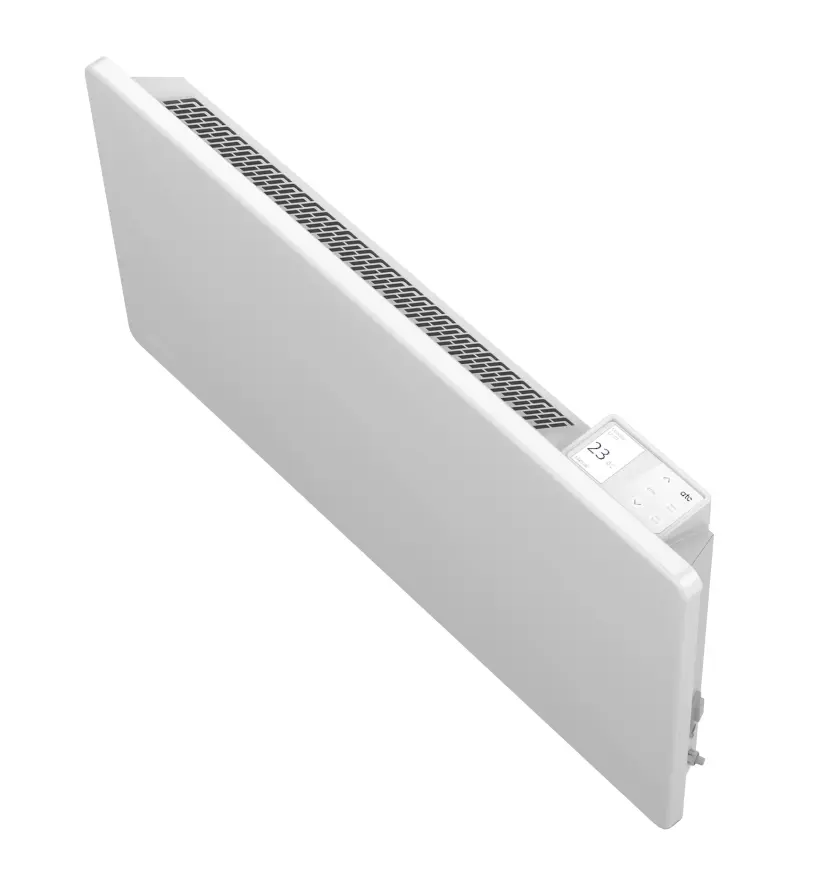
Modern electric radiators may incorporate digital thermostats, programmable schedules and wireless controls.
These features can help users manage heating more precisely.
Some models also include open-window detection, which attempts to identify sudden temperature drops and temporarily reduce heating output.
However, the effectiveness of such features depends on their implementation and the conditions in which they operate.
Electric radiators may use different internal materials or heat distribution methods.
Some incorporate ceramic elements, while others use thermal fluids or metal heating components.
Manufacturers sometimes promote these materials as providing superior efficiency.
However, while heat retention and responsiveness can differ, these characteristics do not fundamentally change the energy conversion efficiency of resistance heating.
A radiator that remains warm after switching off is releasing heat that was stored while it consumed electricity.
It is not generating additional energy without cost.
The most suitable product depends on room requirements, control preferences and installation considerations.
Oil-Filled Radiators and Portable Heating
Oil-filled electric radiators are another common option for supplementary heating.
These appliances use electricity to heat an internal thermal fluid, which then transfers warmth through the radiator body into the surrounding room.
The oil remains sealed within the appliance and is not normally consumed during operation.
One advantage of oil-filled radiators is their relatively gradual heat distribution.
They can continue releasing stored warmth for a period after the heating element switches off.
However, this stored heat was produced using electricity during the earlier heating cycle.
Oil-filled radiators are therefore not inherently more energy-efficient than other conventional electric resistance heaters.
Their practical benefits may include quiet operation, portability and relatively steady heat delivery.
Portable fan heaters offer a different approach.
They use an electric heating element and a fan to distribute warm air quickly.
This can be useful when immediate warmth is required in a small area.
However, fan heaters may produce more noise and can consume substantial electricity when operating continuously.
The choice between these appliances should reflect the intended use.
Occasional supplementary heating requires a different approach from heating an entire property throughout winter.
Heat Pumps and Low-Carbon Heating
Heat pumps represent a fundamentally different heating technology from conventional electric resistance heaters.
Rather than converting electricity directly into heat, they use electricity to transfer heat from an external source into a building.
Air-source heat pumps extract heat from outside air.
Ground-source heat pumps transfer heat from the ground through a suitable collection system.
Because heat pumps move existing heat, they can deliver several units of heat energy for each unit of electricity consumed.
Their performance is commonly described using the coefficient of performance, or COP.
A COP of three means that a heat pump delivers approximately three units of heat for each unit of electricity used under the stated operating conditions.
However, actual performance varies according to outdoor temperature, system design, flow temperatures and installation quality.
Seasonal performance provides a more meaningful indication of efficiency over an extended period.
Heat pumps can offer lower energy consumption than conventional resistance heating when appropriately designed and installed.
However, installation costs and property suitability must also be considered.
Some buildings may require radiator upgrades, insulation improvements or other changes to achieve satisfactory performance.
For homeowners researching Eco Heaters, heat pumps deserve consideration when the objective is to reduce whole-property heating energy consumption rather than provide occasional supplementary warmth.
Smart Thermostats and Heating Controls
Heating controls are among the most practical ways to reduce unnecessary energy consumption.
A programmable thermostat allows users to set heating schedules according to daily routines.
For example, a room may require warmth during working hours but little heating overnight.
Smart thermostats can provide additional flexibility through mobile applications and remote control.
Some systems offer occupancy detection, weather-responsive adjustments or learning functions.
However, these features should be evaluated according to their practical usefulness.
A smart heating system does not automatically reduce energy consumption if users maintain unnecessarily high temperatures or heat unoccupied rooms.
The greatest savings generally arise from improved control and sensible settings.
Zoned heating can be particularly useful in larger properties.
Rather than maintaining the same temperature throughout the building, different rooms can be controlled independently.
Bedrooms, home offices and living spaces often have different occupancy patterns.
Matching heating schedules to these patterns can reduce waste.
For electric heating systems, accurate thermostats and appropriate room-by-room controls may be more valuable than decorative or premium features.
How Insulation Affects Heating Performance
The energy required to heat a property depends heavily on how quickly heat escapes.
Poorly insulated walls, roofs, floors and windows can increase heating demand.
Draughts and uncontrolled ventilation can also contribute to heat loss.
Even an efficient heating system may struggle to maintain comfortable temperatures in a building with significant heat loss.
Improving insulation can reduce the amount of energy required to maintain indoor warmth.
Loft insulation is often an important consideration because heat can escape through poorly insulated roof spaces.
Wall insulation may also provide benefits, although the appropriate method depends on the construction of the property.
Draught-proofing around suitable doors and windows can reduce unwanted air movement.
However, adequate ventilation remains essential for indoor air quality and moisture management.
Sealing necessary ventilation openings can create problems, particularly where combustion appliances are present.
Double or secondary glazing may also contribute to improved thermal comfort.
Before investing heavily in replacement heating appliances, homeowners should consider whether relatively straightforward improvements to the building fabric could reduce heating requirements.
For people comparing Eco Heaters, the performance of the surrounding property can be just as important as the appliance itself.
Calculating Electric Heater Running Costs
Understanding running costs helps consumers compare heating options realistically.
Electricity consumption is measured in kilowatt-hours.
The energy used by a heater can be calculated by multiplying its power rating in kilowatts by the number of hours it operates at that output.
For example, a 1.5kW heater running continuously at full power for four hours consumes six kilowatt-hours.
At an illustrative electricity price of 25p per kilowatt-hour, the cost would be £1.50.
This calculation excludes any standing charge and assumes the heater operates continuously at full output.
In practice, a thermostatically controlled heater may switch on and off as the room reaches its target temperature.
Actual consumption will therefore depend on room conditions and heat loss.
Electricity tariffs also vary between households and suppliers.
Some consumers may have time-of-use tariffs offering lower electricity prices during particular periods.
However, these arrangements should be assessed carefully.
A cheaper overnight tariff does not necessarily make a particular heating appliance more efficient.
It changes the price paid for electricity rather than the amount of heat produced per unit consumed.
The following examples illustrate how power rating and operating time affect electricity costs.
Heater power Running time Electricity used Cost at 25p/kWh
500W 4 hours 2 kWh £0.50
1,000W 4 hours 4 kWh £1.00
1,500W 4 hours 6 kWh £1.50
2,000W 4 hours 8 kWh £2.00
These figures are illustrative rather than current tariff quotations.
When evaluating Eco Heaters, comparing expected energy consumption under realistic conditions provides a more reliable indication of cost than advertised savings percentages.
Choosing the Right Heater for Different Rooms
Different rooms have different heating requirements.
A small bedroom may require less heating output than a large open-plan living area.
Room size is important, but it is not the only consideration.
Ceiling height, insulation, glazing, external walls and ventilation can all influence heat loss.
A poorly insulated room may require substantially more heating than a well-insulated room of similar dimensions.
For occasional use in a home office, a portable heater with accurate thermostat control may provide a convenient solution.
For regular heating in a bedroom, a fixed electric radiator with programmable controls may offer greater convenience.
Bathrooms require particular care because electrical appliances must be suitable for the environment and installed in accordance with relevant electrical safety requirements.
Standard portable heaters should not be used in unsuitable wet locations.
Large open-plan spaces may benefit from a heating system designed to distribute warmth evenly.
For whole-property heating, heat pumps or appropriately designed central heating systems may offer better long-term performance than multiple portable electric heaters.
A professional heat-loss calculation can help determine suitable heating capacity.
Selecting an appliance based solely on floor area or manufacturer estimates may result in inadequate heating or unnecessary expenditure.
Environmental Considerations and Carbon Emissions
The environmental impact of heating depends on more than the efficiency of the appliance.
Electric heating produces no combustion emissions at the point of use.
However, the carbon emissions associated with electricity depend on how that electricity is generated.
The UK's electricity supply includes renewable generation alongside other sources.
As electricity generation becomes less carbon-intensive, electric heating can benefit from a lower associated carbon footprint.
Nevertheless, different electric heating technologies consume different amounts of electricity to provide equivalent warmth.
Heat pumps can reduce electricity demand substantially compared with conventional resistance heating under suitable conditions.
This can influence both running costs and environmental impact.
Product lifespan and manufacturing also deserve consideration.
A durable heater that operates reliably for many years may reduce the need for frequent replacement.
Repairability, spare-part availability and responsible disposal can also contribute to more sustainable purchasing decisions.
Consumers should be cautious about vague environmental descriptions such as completely green or zero-carbon heating.
Such claims may overlook electricity generation, manufacturing or other lifecycle impacts.
For consumers researching Eco Heaters, a meaningful environmental comparison should consider energy consumption, expected lifespan and the wider heating system rather than relying exclusively on marketing terminology.
Safety Features and Installation Requirements
Safety is an essential consideration when choosing heating appliances.
Portable electric heaters should be positioned according to manufacturer instructions and kept away from combustible materials.
Clothing, bedding, curtains and furniture can create fire risks if placed too close to heating elements or hot surfaces.
Some modern heaters incorporate overheat protection and tip-over switches.
These features may reduce certain risks but do not eliminate the need for safe operation.
Fixed electric heating systems should be installed in accordance with applicable electrical requirements.
Higher-powered appliances may require dedicated circuits or professional assessment.
Consumers should avoid overloading extension leads or using unsuitable electrical accessories.
For products installed in bathrooms or other potentially damp environments, appropriate electrical protection and installation arrangements are particularly important.
Heaters should also be selected from reputable suppliers offering clear technical specifications and safety information.
Relevant conformity markings and documentation should be considered, although markings alone are not a guarantee of product quality.
A qualified electrician should be consulted where installation requirements are uncertain.
Comparing Eco Heater Prices and Long-Term Value
The purchase price of a heater represents only part of its overall cost.
A low-cost portable appliance may be suitable for occasional use but expensive to operate continuously.
A more expensive heating system may offer lower long-term energy consumption, depending on the technology and installation.
For conventional electric resistance heaters, higher purchase prices do not necessarily translate into lower electricity consumption.
Premium models may provide better thermostats, improved controls, more attractive designs or longer warranties.
These features can offer practical value, but consumers should distinguish convenience from fundamental energy efficiency.
Heat pumps involve a different cost structure.
Installation costs are generally higher, but their ability to transfer heat efficiently can reduce electricity consumption compared with direct electric resistance heating.
The financial outcome depends on energy prices, installation quality and the property's heating requirements.
Consumers should also consider warranties, spare parts and expected product lifespan.
A reliable heater with accessible support may offer better long-term value than a cheaper appliance that requires early replacement.
For those comparing Eco Heaters, total ownership cost provides a more useful measure than the initial purchase price alone.
Common Misconceptions About Energy-Saving Heaters
Heating advertisements sometimes include claims that require careful interpretation.
One common misconception is that a particular electric resistance heater can produce substantially more heat than another appliance while using the same electricity.
In reality, conventional resistance heaters operate according to the same fundamental energy conversion principles.
Differences in heat distribution and control can influence comfort and usage patterns, but they do not create additional energy.
Another misconception concerns heat-retaining materials.
Ceramic elements, thermal fluids and other materials can store heat and release it gradually.
However, the stored energy must first be supplied through electricity.
A heater remaining warm after switching off does not mean that it is producing free heat.
Claims about heating an entire house using a very small portable appliance should also be treated cautiously.
The amount of heating required depends on building heat loss and the desired indoor temperature.
A low-powered heater cannot continuously replace more heat than it produces.
Consumers should also distinguish between reducing electricity consumption and reducing electricity expenditure.
A time-of-use tariff may lower costs without reducing the quantity of electricity consumed.
Understanding these principles helps prevent unrealistic expectations.
Making an Informed Eco Heating Decision
The increasing range of modern heating products gives UK consumers more flexibility when choosing how to warm their homes and workplaces.
However, no single technology is automatically the most economical or environmentally responsible solution for every property.
Conventional electric heaters can provide convenient, controllable warmth, particularly for individual rooms and occasional use.
Infrared panels may offer practical advantages where targeted radiant heating is suitable.
Heat pumps can provide substantially greater heating efficiency for whole-property applications when correctly designed and installed.
Smart controls and improved insulation can reduce unnecessary energy consumption regardless of the heating technology selected.
Consumers should compare products using realistic running costs, appropriate heating capacity, safety features and long-term reliability.
When choosing Eco Heaters, the most effective approach is to consider the entire heating requirement rather than concentrating solely on the appliance. A well-insulated property, correctly sized heating system and sensible temperature controls can deliver more meaningful improvements than unsupported claims about revolutionary energy-saving technology. By understanding the differences between heating methods and evaluating both upfront and ongoing costs, homeowners can make informed decisions that balance comfort, affordability and environmental responsibility.